
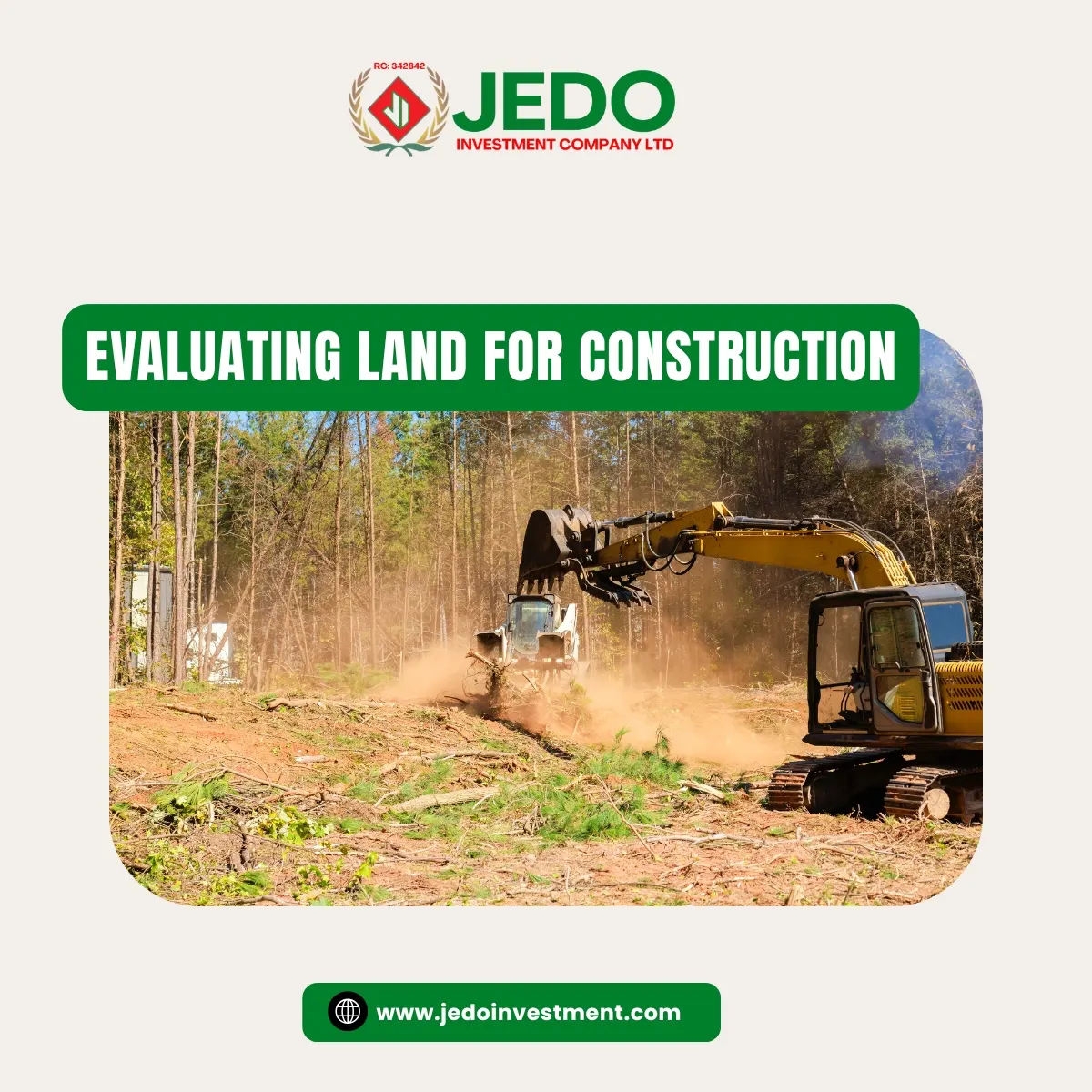
The process of building residential estates, commercial complexes, or mixed-use developments begins long before construction equipment arrives on-site. One of the most critical steps in real estate development is evaluating land for construction because the quality, location, and condition of a property determine the long-term success of the project. Estate developers carefully analyze multiple factors to avoid costly mistakes, legal disputes, environmental problems, or structural failures in the future.
Modern developers no longer rely solely on physical inspections and manual calculations. Today, advanced technologies such as drones, Geographic Information Systems (GIS), and artificial intelligence are transforming how land assessments are conducted. Could AI eventually predict whether a property will become a profitable real estate investment before construction even starts? Many experts believe the future of real estate development is already moving in that direction.
Location and Accessibility
One of the first things estate developers consider is the location of the land. Accessibility greatly influences the value and usability of a property. Developers assess how close the land is to major roads, transportation systems, schools, hospitals, shopping centers, and business districts. A strategically located property often attracts buyers and investors more quickly.
When evaluating land for construction, developers also study future urban expansion plans. Areas with proposed infrastructure projects such as highways, rail systems, or commercial hubs usually experience increased property value over time. A piece of land that appears isolated today may become highly valuable in a few years because of government development plans.
Accessibility to utilities is another major concern. Developers check the availability of water supply, electricity, drainage systems, and internet connectivity. Land without these basic services may require additional investment, increasing the total development cost significantly.
Conducting Soil and Geotechnical Analysis
The condition of the soil directly affects the stability and durability of any structure built on the property. Estate developers hire geotechnical engineers to carry out soil tests before beginning a project. These tests determine the soil’s strength, moisture content, and load-bearing capacity.
During evaluating land for construction, soil analysis helps developers identify whether the land is suitable for high-rise buildings, residential estates, or industrial facilities. Weak or waterlogged soil may require expensive reinforcement techniques such as piling or soil stabilization before construction can proceed safely.
Flood risks are also examined during geotechnical investigations. Land located in flood-prone areas can lead to severe structural damage and financial losses. Developers often avoid such properties unless proper drainage and flood-control systems can be implemented effectively.
Examining Legal Documentation and Ownership
Legal verification is one of the most important aspects of real estate development. Before purchasing land, developers thoroughly investigate ownership records and property titles to ensure there are no disputes or encumbrances attached to the property.
While evaluating land for construction, developers review documents such as Certificates of Occupancy, survey plans, deed agreements, and zoning permits. Any inconsistency in documentation can delay projects or even result in legal battles.
Zoning regulations are equally important because they determine how the land can be used. Some areas are designated strictly for residential development, while others may allow commercial or industrial activities. Developers must ensure their intended project aligns with local government regulations to avoid penalties or demolition orders.
Environmental compliance is another legal consideration. In many regions, developers are required to conduct Environmental Impact Assessments (EIA) before starting large-scale projects. These studies examine how the development may affect surrounding ecosystems and communities.
Assessing Topography and Drainage
The physical shape and elevation of the land influence construction feasibility and overall project cost. Flat land is generally easier and cheaper to develop, while steep or uneven terrain may require significant excavation and grading work.
Estate developers prioritize proper drainage systems because poor water flow can weaken foundations and damage infrastructure over time. When evaluating land for construction, professionals carefully inspect how rainwater moves across the property and whether the site is prone to erosion or water accumulation.
Topographical surveys also help architects and engineers design structures that fit naturally within the environment. This approach improves sustainability and reduces unnecessary construction expenses. In luxury estate developments, elevated land with scenic views may even increase the market value of the project.
Technology has made topographical analysis more accurate than ever before. Developers now use drones and 3D mapping tools to create detailed representations of land surfaces within a short period.
Evaluating Market Demand and Investment Potential
No development project can succeed without market demand. Estate developers conduct extensive market research to determine whether people actually want to buy or rent properties in a particular area.
Part of evaluating land for construction involves analyzing population growth, income levels, housing shortages, and economic activity within the region. Developers study competing projects to understand pricing trends and customer preferences.
For example, an area with a growing middle-class population may be ideal for affordable housing developments, while locations near commercial centers may be better suited for luxury apartments or office complexes.
Artificial intelligence is increasingly being used in market analysis. AI-powered systems can process large amounts of demographic and economic data to predict future property demand and investment opportunities. This helps developers make more informed decisions and reduce financial risks.
Infrastructure and Community Development Plans
Estate developers also investigate ongoing and future infrastructure projects around the land. Government investments in roads, airports, bridges, or public transportation often increase property values significantly.
When evaluating land for construction, developers pay close attention to neighborhood growth patterns and community development plans. Areas with upcoming schools, hospitals, shopping malls, and recreational facilities tend to attract more residents and businesses.
Security and social stability are also considered during this stage. Buyers and investors generally prefer locations with low crime rates and organized community structures. Developers often collaborate with urban planners and local authorities to understand long-term regional development goals.
Additionally, sustainability has become a major priority in modern real estate projects. Developers increasingly seek land that supports eco-friendly construction practices, renewable energy systems, and green landscaping initiatives.
Financial Feasibility and Risk Analysis
Every real estate project must be financially viable before development begins. Developers prepare cost estimates covering land acquisition, permits, labor, materials, infrastructure, and maintenance expenses.
In evaluating land for construction, risk assessment helps developers identify potential challenges that could affect profitability. These risks may include unstable economic conditions, fluctuating material prices, legal disputes, environmental concerns, or construction delays.
Financial institutions and investors also participate in the assessment process. Banks often require feasibility studies before approving loans for major developments. A well-analyzed property with strong growth potential is more likely to secure funding.
Developers must balance development costs with projected returns on investment. Sometimes a cheaper piece of land may ultimately become more expensive because of poor infrastructure or extensive preparation requirements.
Conclusion
The success of any real estate project depends heavily on careful planning and proper land assessment. From location analysis and soil testing to legal verification and financial feasibility studies, estate developers follow a detailed process to minimize risks and maximize long-term value. As technology continues to evolve, artificial intelligence and digital mapping tools are making land evaluation faster, smarter, and more accurate than ever before.
Anyone interested in real estate development, property investment, or estate planning should work with experienced professionals who understand the complexities involved in selecting the right property. For trusted guidance and quality real estate solutions, clients should reach out to Jedo Investment.
